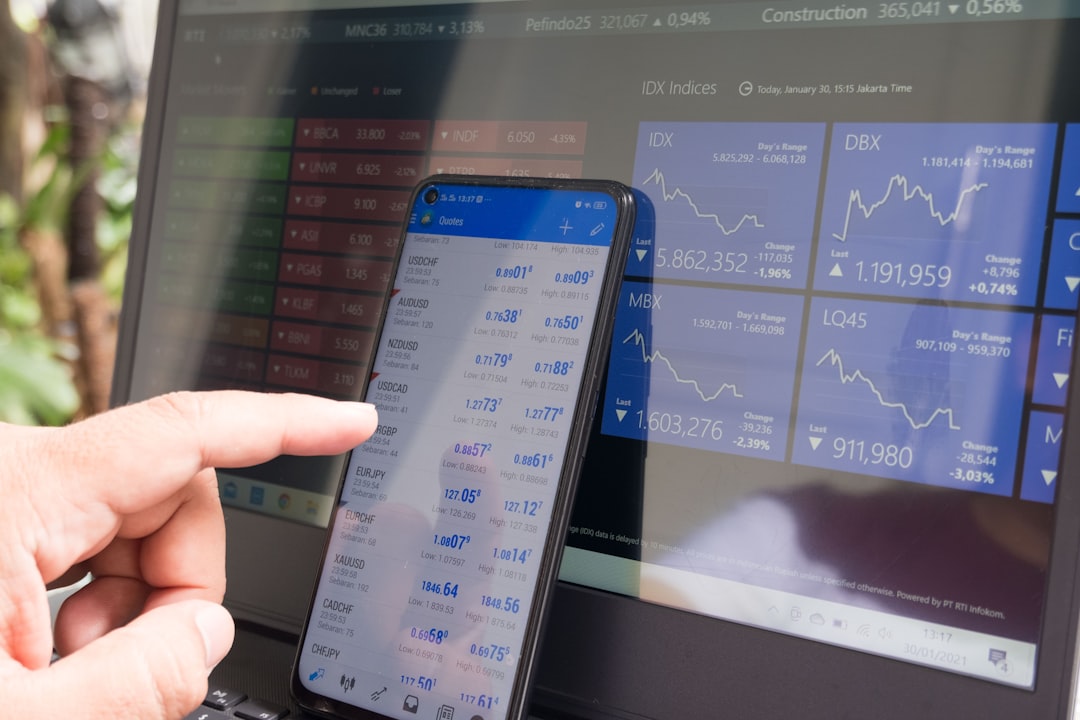
Forex trading has increasingly moved beyond the traditional desktop environment as traders seek greater flexibility, faster market awareness, and convenient access to financial information. A modern forex trading app android can bring market monitoring, chart analysis, account management, and order functionality into a mobile environment, allowing users to stay connected while away from a conventional workstation. This shift reflects a wider transformation in financial technology, where accessibility and responsive digital tools have become important parts of the trading experience. The development of mobile platforms has also encouraged traders to pay greater attention to usability, security, market information, and disciplined decision-making.
What’s Covered
- Mobile Access Has Become a Key Trading Trend
- Real-Time Market Information Supports Awareness
- Charting Has Become More Mobile-Friendly
- Trading Discipline Remains Essential
- Risk Management Is Central to Forex Activity
- Security Has Become Increasingly Important
- Notifications Can Improve Market Awareness
- Economic Events Influence Currency Markets
- Market Analysis Requires Context
- User Experience Influences Platform Efficiency
- Education Supports Better Platform Use
- Mobile Trading and Changing Consumer Behaviour
- What Traders Should Examine Before Using a Mobile Platform
- The Future of Mobile Forex Trading
- Conclusion
Mobile Access Has Become a Key Trading Trend
Mobile technology has changed how people interact with financial markets. Instead of depending exclusively on desktop terminals, users can monitor currency markets through smartphones and other connected devices. This creates a more flexible environment for observing market developments during different parts of the trading day.
Forex markets operate across global financial centres, creating continuous activity during overlapping trading sessions. Mobile accessibility can therefore be useful when a trader wants to review market conditions while away from a desktop setup. The value of mobile access is not simply convenience. It also comes from the ability to maintain a consistent connection with market information.
Statistics surrounding digital finance consistently show growing reliance on mobile devices for financial interactions. The broader trend indicates that mobile interfaces are becoming an established part of financial technology rather than a temporary alternative to traditional platforms.
Real-Time Market Information Supports Awareness
Currency trading depends heavily on current information. Economic announcements, central-bank decisions, geopolitical developments, employment data, inflation reports, and changes in investor sentiment can all influence currency markets.
A mobile platform can make market information easier to access when traders are not sitting at a computer. Price displays, charts, market-watch functions, and notifications can help users remain aware of developments.
However, access to information does not automatically create better decisions. A trader still needs to interpret market conditions carefully. Mobile technology should therefore be viewed as a communication and analytical tool rather than a substitute for financial knowledge.
Charting Has Become More Mobile-Friendly
Technical analysis remains an important part of many forex strategies. Traders may study price movements, trends, support and resistance areas, volatility, and other technical characteristics before making decisions.
Modern mobile interfaces have improved the way charts can be viewed on smaller screens. Adjustable timeframes, technical indicators, drawing functions, and interactive charts can provide a compact analytical environment.
The quality of a mobile charting experience depends on several factors. Clear presentation, responsive controls, readable price information, and smooth navigation can make analysis easier. Poorly designed interfaces, by contrast, may create unnecessary distractions.
For this reason, platform usability is increasingly relevant when evaluating mobile trading technology.
Trading Discipline Remains Essential
One of the most important characteristics of successful market participation is discipline. Mobile access may make it easier to observe markets, but constant availability can also encourage unnecessary activity.
A trader who repeatedly checks price movements without a defined strategy may become distracted by short-term fluctuations. This can result in decisions driven by emotion rather than analysis.
Professional trading practices commonly emphasize planning before entering a position. Traders may define their objectives, identify potential market conditions, establish risk parameters, and determine circumstances under which an idea is no longer valid.
A mobile platform should support that process rather than encourage impulsive behaviour.
Risk Management Is Central to Forex Activity
Forex trading involves financial risk, and market prices can move rapidly. Currency markets can respond to economic developments, unexpected news, changes in monetary policy, and shifts in global sentiment.
Risk management therefore remains a fundamental consideration. Traders may use predefined risk controls, position-sizing methods, stop-loss arrangements, and other protective techniques according to their strategy and circumstances.
Mobile platforms can make risk-management functions easier to monitor. Notifications may also help traders remain aware of changing market conditions.
Nevertheless, no digital feature removes market risk. Technology can assist with execution and monitoring, but the responsibility for understanding risk remains with the trader.
Security Has Become Increasingly Important
Financial applications handle sensitive information, making cybersecurity an important consideration. Traders should pay attention to account protection, login security, device security, and software updates.
Using strong authentication practices can help reduce unnecessary security exposure. Traders should also avoid accessing financial accounts through unsecured networks or unknown applications.
Official application sources and updated mobile operating systems can contribute to a safer digital environment. Users should also be cautious when responding to unexpected messages requesting account information.
Security is not a single feature. It is an ongoing process involving the platform, device, network, and user.
Notifications Can Improve Market Awareness
Notifications are another important component of mobile trading technology. Alerts can help users remain aware of selected price conditions, market developments, or account activity without continuously watching a chart.
The usefulness of alerts depends on how carefully they are configured. Too many notifications can create information overload, while too few may reduce their practical value.
A structured notification system can therefore help traders focus on events that are genuinely relevant to their strategy. This approach supports efficiency without requiring constant screen monitoring.
Economic Events Influence Currency Markets
Economic calendars are particularly relevant to forex traders. Scheduled announcements can create periods of increased market activity as participants respond to new information.
Common events include central-bank meetings, inflation releases, employment reports, economic growth figures, and other major indicators. Traders often monitor these events because expectations surrounding monetary policy can influence currency demand.
Mobile access to an economic calendar can make this information easier to incorporate into daily planning. Rather than discovering an important announcement unexpectedly, users can review upcoming events and consider how they may affect their trading approach.
Market Analysis Requires Context
Price movements should not be viewed in isolation. A currency pair can react differently depending on broader economic conditions, market expectations, and developments in related economies.
Professional analysis therefore combines multiple sources of information. Technical patterns may be considered alongside fundamental developments, market sentiment, and broader financial conditions.
A mobile application can provide access to many of these resources, but traders still need to determine which information is relevant. Having more data does not necessarily mean having better analysis.
The ability to distinguish significant information from short-term noise remains an important trading skill.
User Experience Influences Platform Efficiency
A mobile trading environment needs to balance functionality with simplicity. Traders may need access to charts, watchlists, market information, order controls, account details, and analytical tools without navigating through unnecessarily complicated menus.
Responsive design is especially important because traders interact with smartphones through touch controls. Buttons, menus, charts, and confirmation screens should be easy to understand.
Statistics from the wider mobile technology sector demonstrate the importance of usability in digital services. Users tend to expect applications to be responsive, intuitive, and reliable. Financial platforms are no exception.
Education Supports Better Platform Use
Technology is most useful when users understand the financial markets they are accessing. Educational resources can help traders learn terminology, market mechanics, technical analysis, fundamental analysis, and risk-management concepts.
Beginners can benefit from learning how currency pairs work before attempting active trading. They should also understand concepts such as spreads, leverage, volatility, liquidity, and order execution.
A mobile platform can provide convenient access to educational information, but learning should remain separate from the assumption that technology guarantees results.
Knowledge, preparation, and disciplined application are more important than simply having sophisticated tools.
Mobile Trading and Changing Consumer Behaviour
The expansion of mobile finance reflects a broader change in consumer expectations. People increasingly expect important services to be accessible through smartphones, and financial markets have followed the same direction.
Mobile forex technology combines convenience with continuous market connectivity. This can support traders who prefer flexible workflows and want to integrate market observation into their daily routines.
At the same time, responsible use requires clear boundaries. Traders may benefit from scheduled analysis periods instead of constantly responding to every market movement.
The growing role of mobile technology therefore represents both an opportunity and a responsibility.
What Traders Should Examine Before Using a Mobile Platform
Several practical characteristics deserve attention when evaluating a mobile trading environment. These include platform reliability, chart functionality, market information, order-management tools, account security, notification controls, and ease of navigation.
Traders should also confirm that the application is compatible with their device and operating system. Regular software updates can improve functionality and security.
Another important consideration is whether the available tools support the trader’s existing strategy. A platform should complement a clearly defined approach rather than determine the approach.
The Future of Mobile Forex Trading
The evolution of mobile financial technology is likely to continue influencing how traders interact with currency markets. Improvements in interface design, analytics, notifications, security, and connectivity can make mobile platforms increasingly capable.
Artificial intelligence and automated analytical features may also influence future financial applications. However, technological development does not eliminate the need for human judgement.
The fundamental principles of market analysis and risk awareness remain relevant regardless of the device used.
Conclusion
Mobile forex technology has become an important part of the modern trading environment. Convenient market access, charting capabilities, alerts, account monitoring, and analytical resources can help traders maintain a structured workflow from a smartphone.
The broader statistics of digital finance point toward continued adoption of mobile services, but accessibility should always be accompanied by responsible decision-making. Traders who combine suitable technology with market education, careful analysis, security awareness, and disciplined risk management can use mobile platforms as practical tools within a broader trading process.
Ultimately, the value of mobile forex technology comes from how intelligently it is used. A reliable platform can improve access to information and trading functions, while sound preparation and disciplined behaviour remain central to navigating the currency markets.
Key Points
- Forex trading has shifted from desktop to mobile environments, enhancing market monitoring, account management, and order functionality.
- Mobile platforms facilitate continuous market access across global financial centers, allowing traders to remain updated while away from their desktops.
- Technical analysis tools on mobile devices have improved, offering adjustable timeframes and interactive charts for better analysis.
- While mobile access can promote discipline, it may also lead traders to make impulsive decisions without a defined strategy.
- Risk management in forex trading is essential, and mobile platforms provide tools to help monitor risk, though the ultimate responsibility lies with the trader.
- Cybersecurity is a critical concern for financial apps, necessitating attention to account protection and secure network usage.