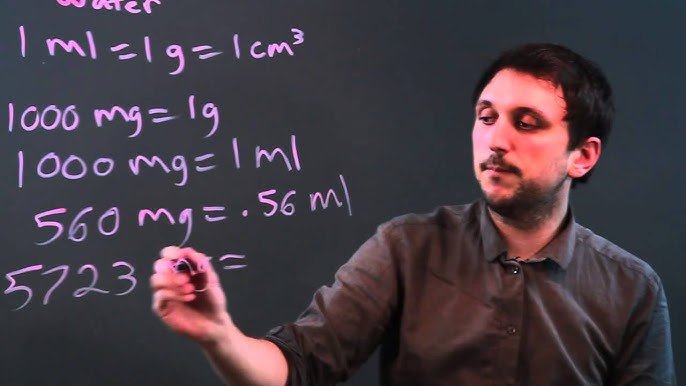
There are 1,000 milligrams (mg) in 1 milliliter (ml). Understanding the conversion between mg and ml is essential in various fields, from medicine to cooking. When dealing with liquid medications or substances, knowing how many mg are in ml helps ensure accurate dosages. This simple yet crucial conversion can make a significant difference in achieving desired outcomes. Let’s delve deeper into the relationship between milligrams and milliliters to simplify this common query of ‘how many mg in ml.’

Understanding How Many Milligrams (mg) are in Milliliters (ml)
Have you ever wondered about the relationship between milligrams (mg) and milliliters (ml)? These two units of measurement are commonly used in the world of medicine, cooking, and more. Let’s dive into the fascinating world of converting milligrams to milliliters and vice versa to unravel this mystery.
What are Milligrams and Milliliters?
Before we delve into the conversion between milligrams and milliliters, let’s first understand what each unit represents.
Milligrams (mg)
A milligram is a unit of measurement that is used to quantify mass or weight. It is a smaller unit compared to a gram and is commonly used to measure the amount of a substance, such as medication or ingredients in a recipe. One milligram is equal to one-thousandth of a gram.
Milliliters (ml)
On the other hand, a milliliter is a unit of measurement used to quantify volume or capacity. It is equal to one-thousandth of a liter and is often used to measure the volume of liquids like water, milk, or medicine.
Converting Milligrams to Milliliters
Now, let’s demystify the conversion of milligrams to milliliters. The key to understanding this conversion lies in the density of the substance being measured.
Understanding Density
Density is a measure of how much mass is contained in a given volume. Different substances have different densities, which affect the conversion between milligrams and milliliters.
Formula for Conversion
To convert milligrams to milliliters, you need to know the density of the substance in question. The formula for this conversion is:
Milligrams = Milliliters x Density
Example Conversion
As an example, let’s say you have a liquid medication with a density of 1.5 mg/ml. If you have 10 milligrams of this medication, the corresponding volume in milliliters would be:
10 mg = 10 ml x 1.5
10 mg = 15 ml
Converting Milliliters to Milligrams
Similarly, you can convert milliliters to milligrams using the density of the substance in question.
Formula for Conversion
The formula for converting milliliters to milligrams is the inverse of the previous formula:
Milligrams = Milliliters / Density
Example Conversion
Let’s reverse our previous example. If you have 20 milliliters of the same liquid medication with a density of 1.5 mg/ml, then the equivalent amount in milligrams would be:
20 ml = 20 ml / 1.5
20 ml = 30 mg
Common Mistakes to Avoid
When dealing with conversions between milligrams and milliliters, there are some common mistakes that are important to avoid.
Ignoring Density
One of the most common mistakes is overlooking the density of the substance being measured. Density plays a crucial role in accurately converting between milligrams and milliliters.
Using Incorrect Conversion Factors
Using the wrong conversion factor can lead to inaccurate results. Always double-check the density and units you are working with to ensure the correctness of your conversions.
Practical Applications
Understanding how to convert between milligrams and milliliters can be incredibly useful in various real-life scenarios.
Medical Dosage Calculations
In the field of medicine, healthcare professionals often need to convert between milligrams and milliliters when determining the correct dosage of a medication for a patient.
Cooking and Baking
Chefs and home cooks use milligrams and milliliters in recipes to accurately measure ingredients like spices, flavorings, and liquids.
In conclusion, understanding how many milligrams are in milliliters is essential for various fields, including medicine, cooking, and more. By grasping the concept of density and utilizing the correct conversion formulas, you can easily navigate between these two units of measurement with confidence.
Whether you’re measuring medication doses or following a recipe, knowing how to convert between milligrams and milliliters empowers you to handle measurements accurately and effectively.
How Many Milligrams Are in a Milliliter?
Frequently Asked Questions
How do I convert milligrams (mg) to milliliters (ml)?
To convert milligrams to milliliters, you need to know the density of the substance in question. The formula for conversion is: milligrams (mg) = milliliters (ml) x density. By knowing the density, you can accurately convert mg to ml for the specific substance you are working with.
What is the relation between milligrams (mg) and milliliters (ml) in liquid medicine?
In liquid medicine, the conversion of milligrams (mg) to milliliters (ml) depends on the concentration of the active ingredient. The label on the medicine bottle will provide this information, indicating how many milligrams of the active ingredient are contained in each milliliter of the liquid medication.
Why is it important to understand the conversion between milligrams (mg) and milliliters (ml)?
Understanding the conversion between milligrams and milliliters is crucial in areas such as medicine, chemistry, and cooking. In medicine, dosage instructions are often given in milligrams while the medication is in liquid form, measured in milliliters. Accuracy in converting between the two units is vital to ensure the right dosage is administered.
Final Thoughts
In conclusion, understanding the conversion of milligrams (mg) to milliliters (ml) is crucial for accurate medication dosing. One milliliter of a liquid substance may not always equal one milligram due to varying densities. Therefore, it’s essential to refer to the specific density of the substance to determine how many mg are in 1 ml. Familiarizing oneself with this conversion factor can prevent errors in administering medications precisely. Always double-check the concentration and units when calculating how many mg are in ml for safe and effective treatment.


